
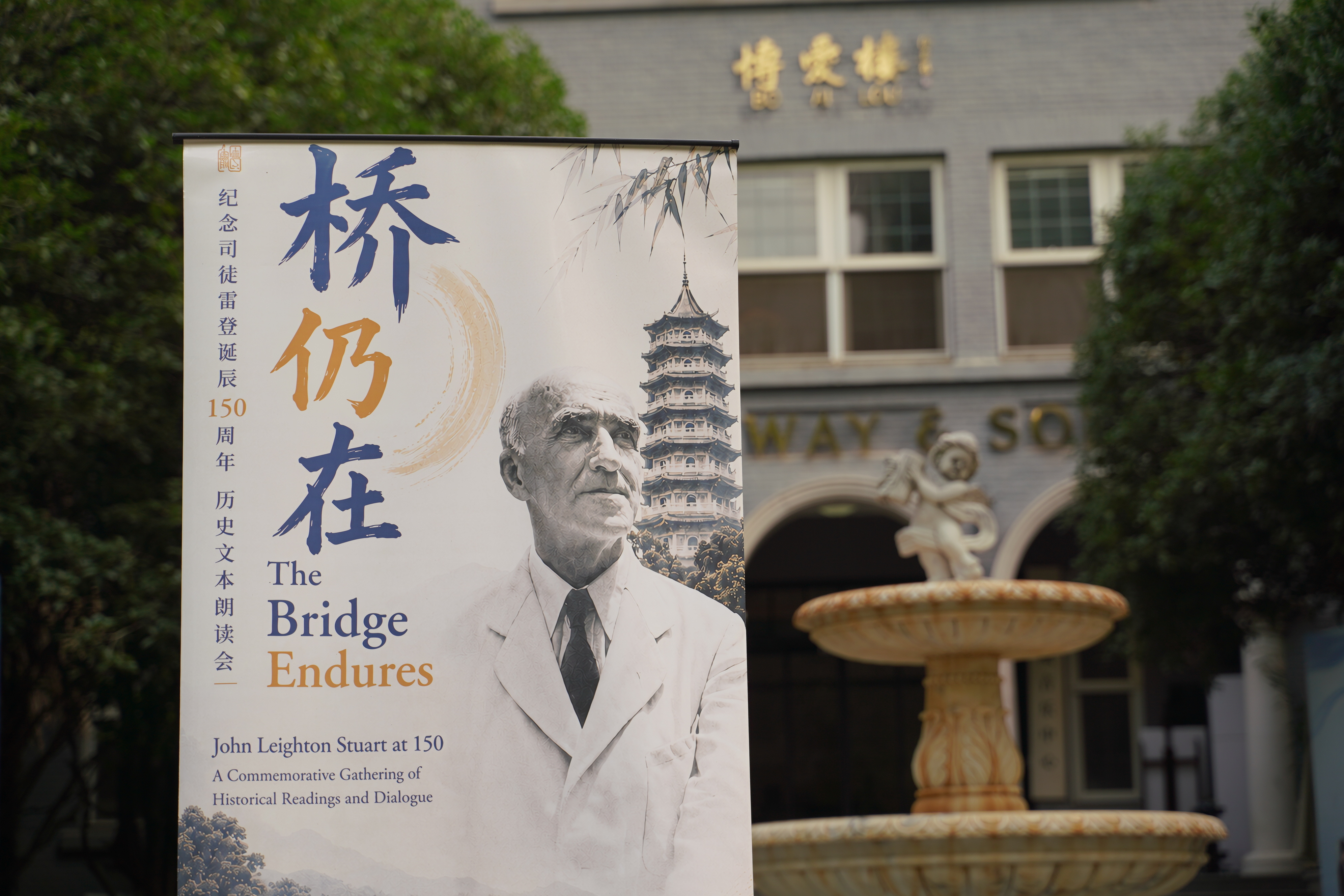

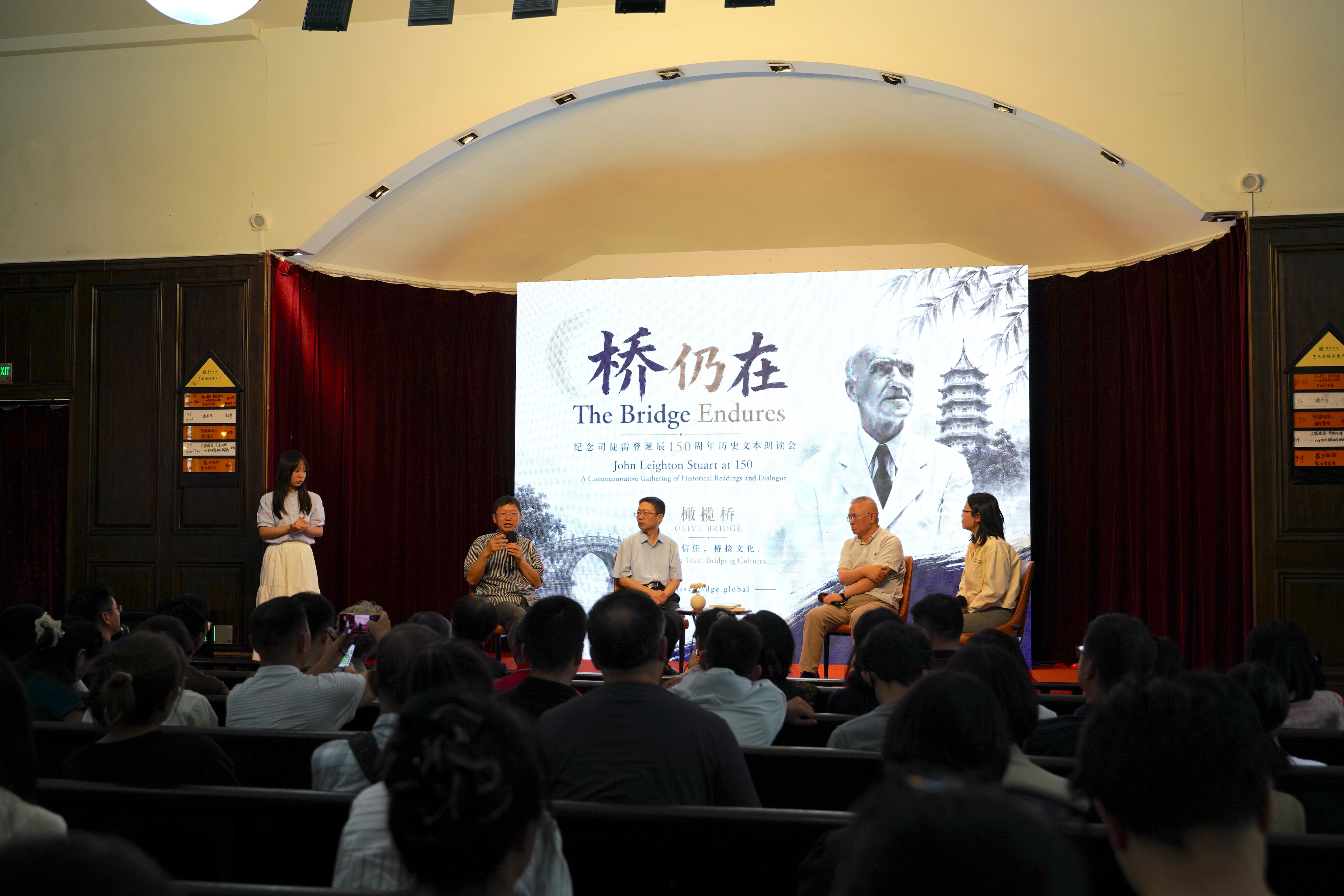


On the morning of September 5, The Bridge Still Stands, an event featuring readings of historical texts to commemorate the 150th anniversary of John Leighton Stuart’s birth, came to Nanjing.
It was the third event Olive Bridge had organized to mark the anniversary, following those in Hangzhou and Shanghai.
Nanjing is a city that cannot be left out of Stuart’s story.
As a young man, he taught at Nanking Theological Seminary for eleven years. Decades later, when he returned as the United States ambassador to China, the city became a major setting for his diplomatic career.
The venue for this event, the Bo’ai Building in the Art Jinling Cultural and Creative Industries Park, stands on the former site of Nanjing Union Theological Seminary, which grew out of the Nanking Theological Seminary where Stuart had taught. Outside the meeting room, the old buildings remain. To tell his story again, more than a century later, in a place connected to his early life gave the occasion a particular resonance.
From Live Readings to a Historical Film
At the Hangzhou and Shanghai events, five readers sat before the audience and read from autobiographies, diaries, letters, speeches, and recollections by Stuart and his contemporaries.
In Nanjing, the readers did not return to the stage.
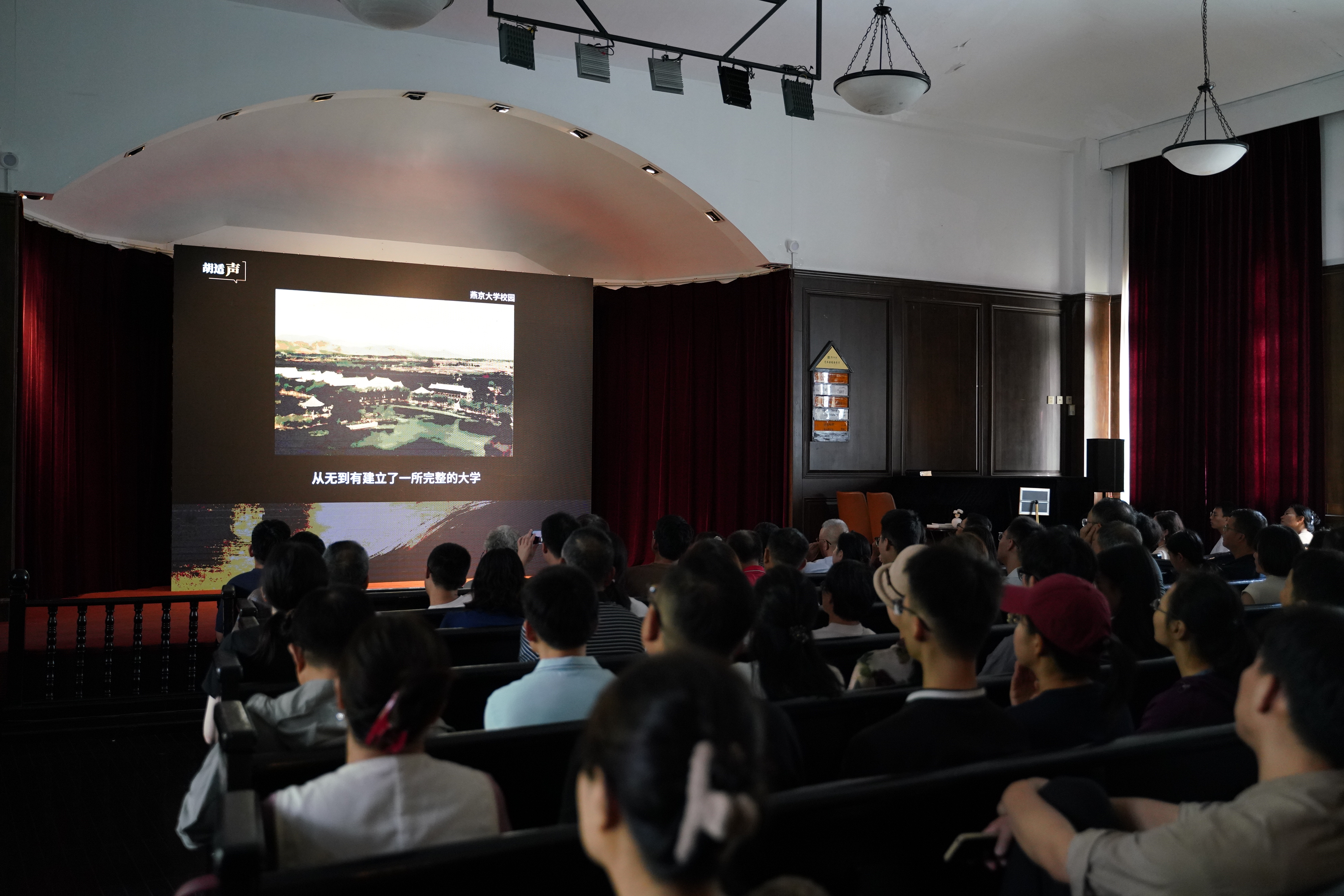
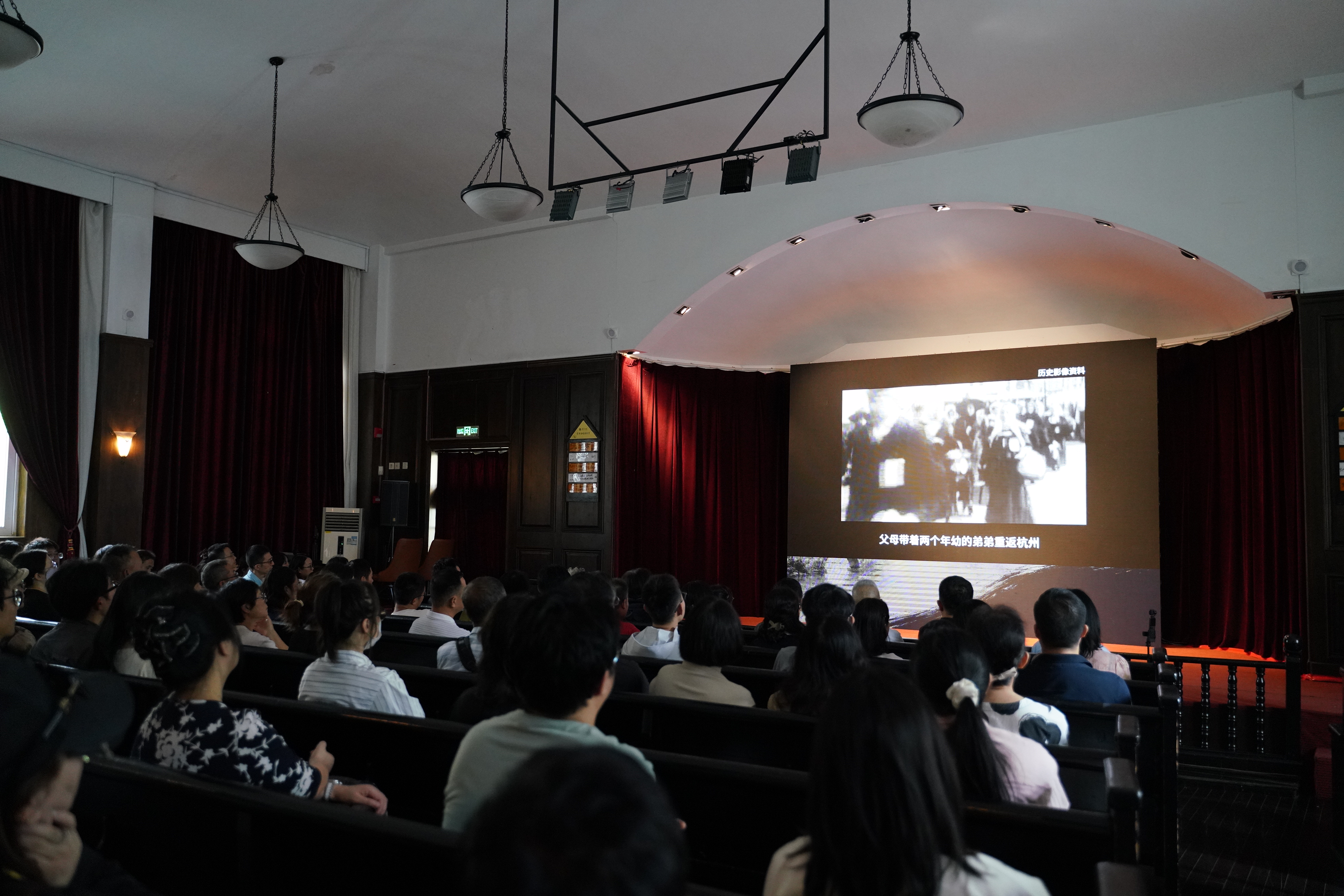
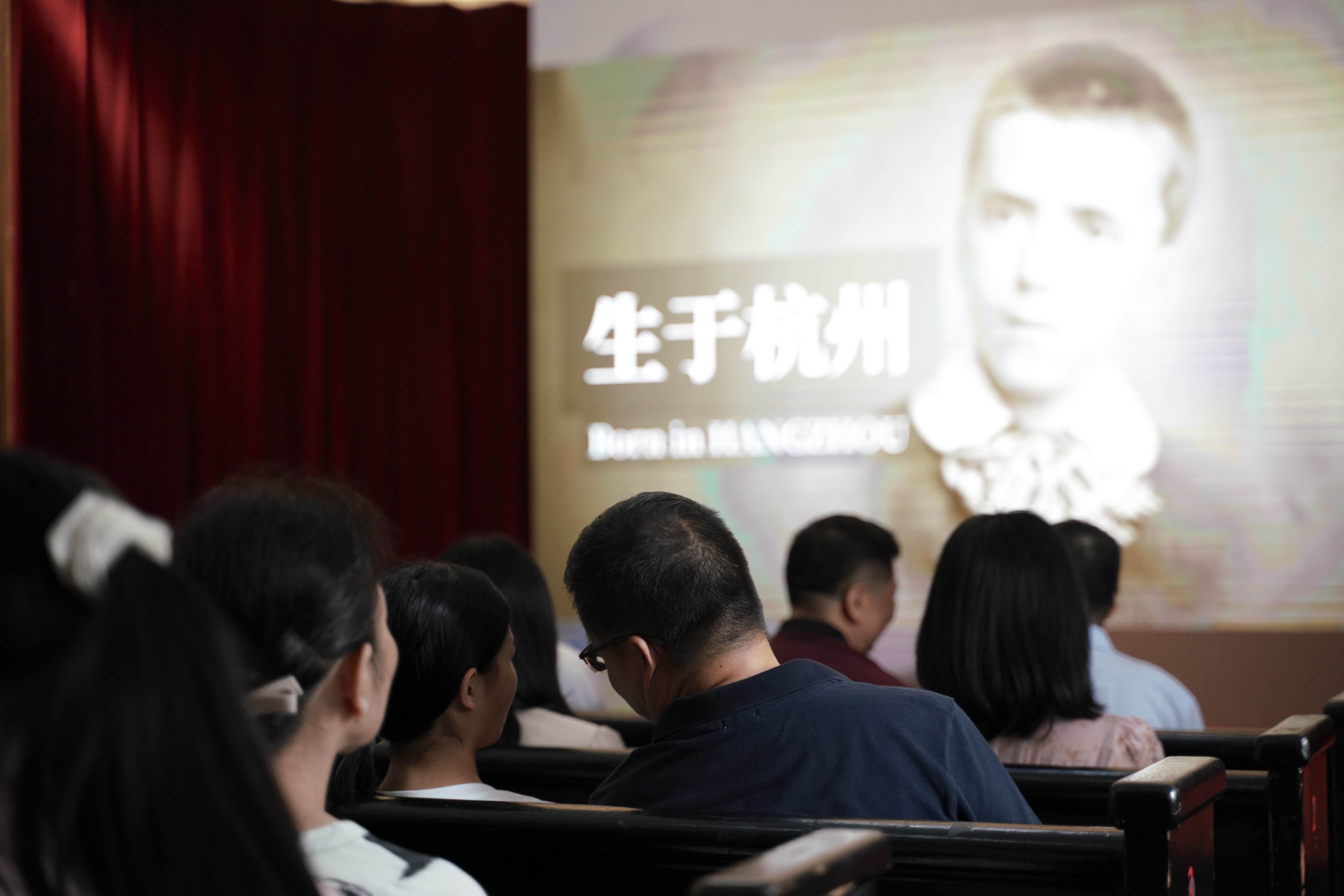
Instead, recordings of the earlier live readings had been edited into a complete historical film of approximately forty-five minutes. Alongside the voices, the narrative incorporated photographs, archival documents, and historical footage of Stuart, Yenching University, China during the war against Japan, and Nanjing during his years as a diplomat, as well as images and records of contemporaries such as Hu Shi, Bing Xin, and Yenching’s faculty and students.
The readings thus became more than words to be heard.
The audience saw his childhood in Hangzhou, his early adult years at Nanking Theological Seminary, and the gradual transformation of an undeveloped tract of land into Yenching’s campus. They also saw how war, imprisonment, and diplomatic impasses entered and shaped his life.
We held to the principle that had guided the project from the outset: to let the historical figures speak for themselves as far as possible. We brought the writings of Stuart, his friends, students, colleagues, and contemporaries into conversation with one another, allowing the audience to form their own understanding through voices, faces, and specific events.
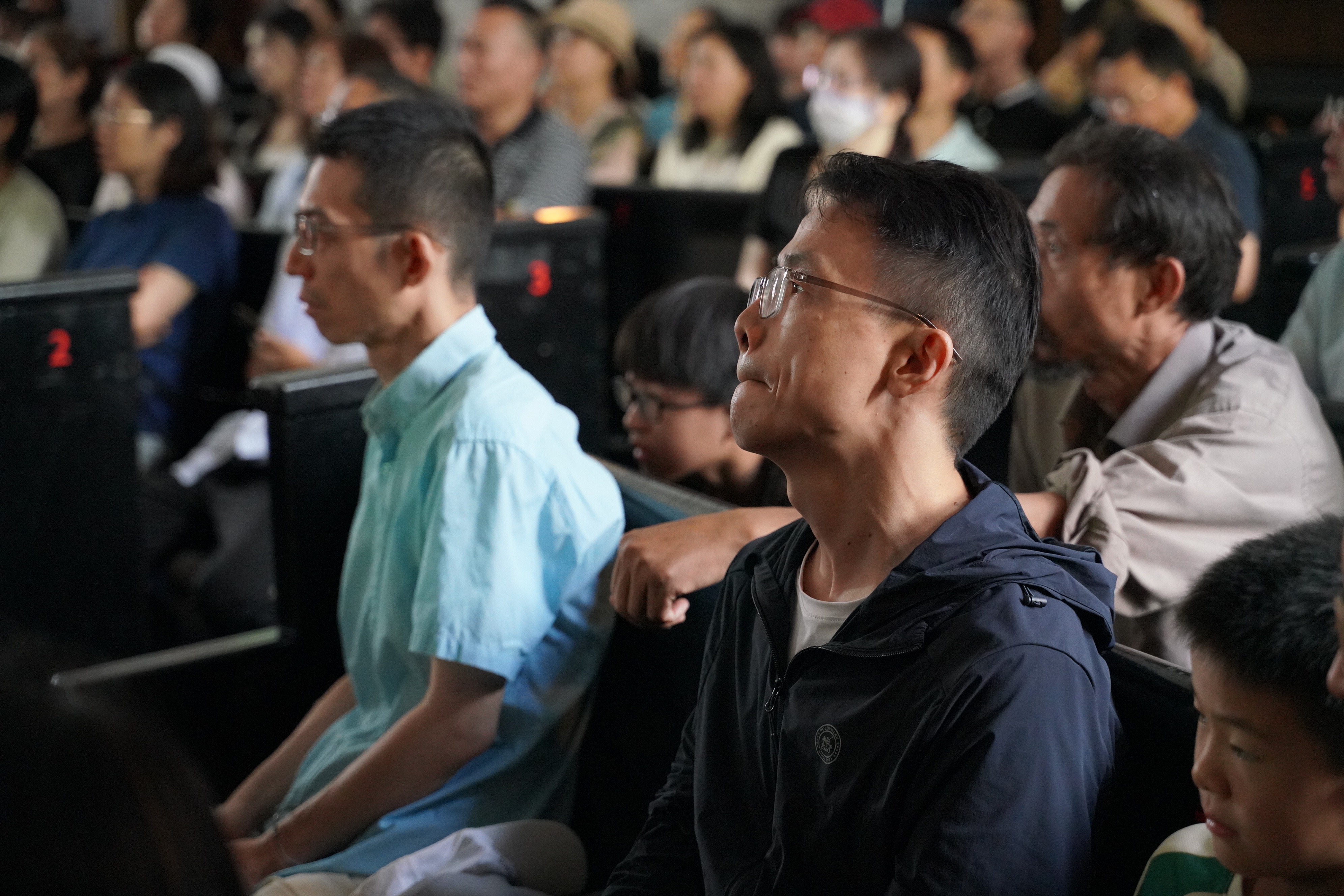
After the event, one audience member singled out the accounts of Stuart’s support for students going to the front to resist the Japanese invasion, and of his later imprisonment by the Japanese military. These scenes, he said, had left him “unable to hold back tears.” The film made a historical figure’s work, daily life, and emotions feel real again. “I really wish I could have the chance to sit quietly and watch it several more times.”
When the forty-five-minute film ended, the event moved into a roundtable discussion. History receded from the screen, and the conversation turned to the present.
Starting with Stuart and Returning to the Human Person
The Nanjing roundtable brought together three guests from different fields: Wang Xuefu, founder of the Zhimian Institute for Psychological Counseling in Nanjing and a leading practitioner of existential psychotherapy in China; Zhang Zhipeng, who teaches social work at Nanjing Institute of Technology and has long been involved in social work education and community service; and Xie Zhidong, a professor in the School of Earth Sciences and Engineering at Nanjing University whose interests also include the history of missionaries in modern China and exchanges between China and the West.
These three perspectives, spanning psychology, social work, natural science, and history, initially seemed very different. As the discussion unfolded, however, the speakers converged on several related questions: Beyond a person’s identities, what constitutes character? What kind of person should education ultimately seek to develop? How are truth, freedom, and service related? How does someone find meaning in life, enter another culture, and understand another group of people?
Wang Xuefu | How We See and Treat People Matters More Than Our Identities
For Wang Xuefu, the film’s first impact was to bring Stuart into view as an individual human being behind his many historical identities as a missionary, university president, and diplomat.
“How do you see people, and how do you treat them?” Wang said this was a question he considered especially important in his psychological work. A person’s profession, identity, and social roles matter, but if we keep looking more deeply, what we ultimately encounter is that person’s character and qualities.
Wang said he had long held Stuart in great respect. While teaching at Xiamen University, he had read Bing Xin’s recollections of Stuart: whenever someone on the Yenching campus had a birthday, fell ill, married, or lost a loved one, Stuart would often express his concern in person. Seeing these passages again in the film in Nanjing, many years later, still moved him deeply.
For Wang, these details revealed the enduring qualities of character behind Stuart’s different identities.
He then turned to Yenching University’s educational philosophy. In Wang’s view, education at Yenching involved more than the acquisition of knowledge and professional skills; it showed a clear concern for character. A well-educated person should possess more than knowledge and ability. In relating to oneself and others, and in entering other cultures, that person should be neither arrogant nor self-abasing, but independent, psychologically sound, and whole.
As artificial intelligence becomes increasingly capable of transmitting knowledge, this question grows more urgent. If education amounts only to the accumulation of exam results, credentials, skills, and other external attributes, a person may become “someone pieced together from external attributes,” without the inner qualities that truly sustain a life. Wang therefore emphasized that schools and families alike need to put the development of the human person back at the center of education and upbringing.
On the question of meaning in life, Wang drew on the experience of Viktor Emil Frankl, the psychologist and founder of logotherapy. A person may lose many of the external conditions on which life depends, he said, yet one thing still belongs to that person: the attitude they choose toward their circumstances. Applied to Stuart, Wang suggested, this sustaining “attitude” was his inner faith, which enabled him to keep acting through long years of war, imprisonment, political conflict, and diplomatic difficulty. On the basis of that faith, he repeatedly chose to continue his educational work and service to others, while also trying to reconcile conflicting parties and seek peace.
Wang connected this to a central proposition in existential psychology: meaning is not something others define in advance and hand to us; we must seek it for ourselves.
In Wang’s view, Stuart’s life was itself a process of seeking and choosing. Born in China, he was influenced by his father’s generation and the missionary traditions he inherited. Yet he did not simply reproduce the path of the generation before him. Through lived experience, he kept reconsidering what he ought to do.
“Existence precedes essence.” Human beings have the freedom to choose, and each person must keep answering through experience, judgment, and action: Who am I? What kind of life do I want to live? What truly matters to me and to others?
Zhang Zhipeng | Yenching’s Ideals Ultimately Found Expression in Service
If Wang Xuefu brought the discussion to character, Zhang Zhipeng pursued a further question: How do character and ideals take practical form?
As a social work educator and practitioner, Zhang drew particular attention to Yenching University’s place in the development of social work in China. As early as the 1920s, Yenching offered courses related to social work, and its Department of Sociology later became the Department of Sociology and Social Service. Faculty and students not only studied society but also went beyond the campus to conduct social surveys and provide social services.
Service at Yenching was therefore not an extracurricular charitable activity added to education. It was part of education itself.
Zhang returned to Yenching University’s motto, “Freedom through Truth for Service,” and offered his interpretation.
For him, the ultimate point was service. Character is an abstract concept, but the choices a person makes in daily life and the way they relate to others often reveal the character within. Likewise, truth and freedom are difficult to recognize in any meaningful way unless they enter into actual human relationships.
“All theory must ultimately be put into practice to serve people and address the problems of each individual.”
For Zhang, this movement from ideas to action was precisely what made Stuart worth our attention. His educational work was a large undertaking, yet he also maintained a personal concern for the lives of individual teachers and students. Education, social service, and even faith ultimately found expression in the lives of real people.
When the discussion turned to young people’s sense of meaninglessness and their questions about meaning today, Zhang again insisted on starting with the particular.
In his social work practice, he had met young people who were intelligent, sensitive, and widely read, yet deeply doubtful that life had meaning. In responding to their difficulties, he said, adults should first guard against the impulse to define them all over again through a ready-made set of answers.
More important than grand slogans and advice are acceptance, listening, and being there for someone.
We should, he said, “return to real people and real situations, and offer love to each individual.”
For Zhang, love is not abstract. Listening carefully to someone in pain, offering whatever help we can when a person is in difficulty, and seeing that person as real and unique—such seemingly small acts create meaning in themselves.
“Starting with love is the most direct and simplest way for us to find meaning.”
Xie Zhidong | Understanding Stuart Within the History of a Generation Who Came to China
Xie Zhidong placed Stuart within the broader history of exchanges between China and the West.
A natural scientist, Xie has also long studied the history of missionaries in China. In his view, one of Stuart’s distinctive qualities was that he did not remain within a relatively narrow model of missionary work. He moved gradually from mission into education and eventually helped establish a university with a broad range of disciplines and an open intellectual spirit.
Yenching University offered religious education alongside literature, the social sciences, and the natural sciences. Xie saw this as evidence of Stuart’s expanding vision, through which service moved beyond a religious idea into wider educational and social practice.
Xie himself had spent many years studying on the Yanyuan campus. The film’s early images of Weiming Lake, the campus buildings, and its many old photographs brought back his own memories of university life.
Drawing on his experience in scientific research, he also spoke about the significance of seeking truth itself. The natural sciences seek to identify patterns through continual testing, falsification, and investigation of the world. Since the beginning of the modern era, many missionaries in China had likewise brought new systems of knowledge through schools, medicine, and science education. Chinese people then studied, absorbed, and further developed that knowledge.
To understand missionaries who came to China in the modern era, Xie argued, we should look beyond identity labels and consider what they actually accomplished in the dissemination of knowledge, modern education, and social service.
This also offers an insight for cross-cultural encounters today. To enter another society, we bring something of our own, but we must also be willing to enter the local culture and form relationships with individual people. The knowledge, faith, and resources we have truly received should, in turn, be shared with others.
When the conversation turned to young people’s doubts about meaning and ideals, Xie placed greater emphasis on how adults live their own lives.
Rather than continually telling the next generation what they should do, adults must first answer the question of how they themselves are living.
Even after reaching the middle of life, are we still willing to learn, work, conduct research, and help others? Do we still believe that some things deserve sustained commitment?
For Xie, the older generation’s more important responsibility may be to let young people, through our actions, “see that light in us.”
Audience Responses | Questions About Truth Love and the Self
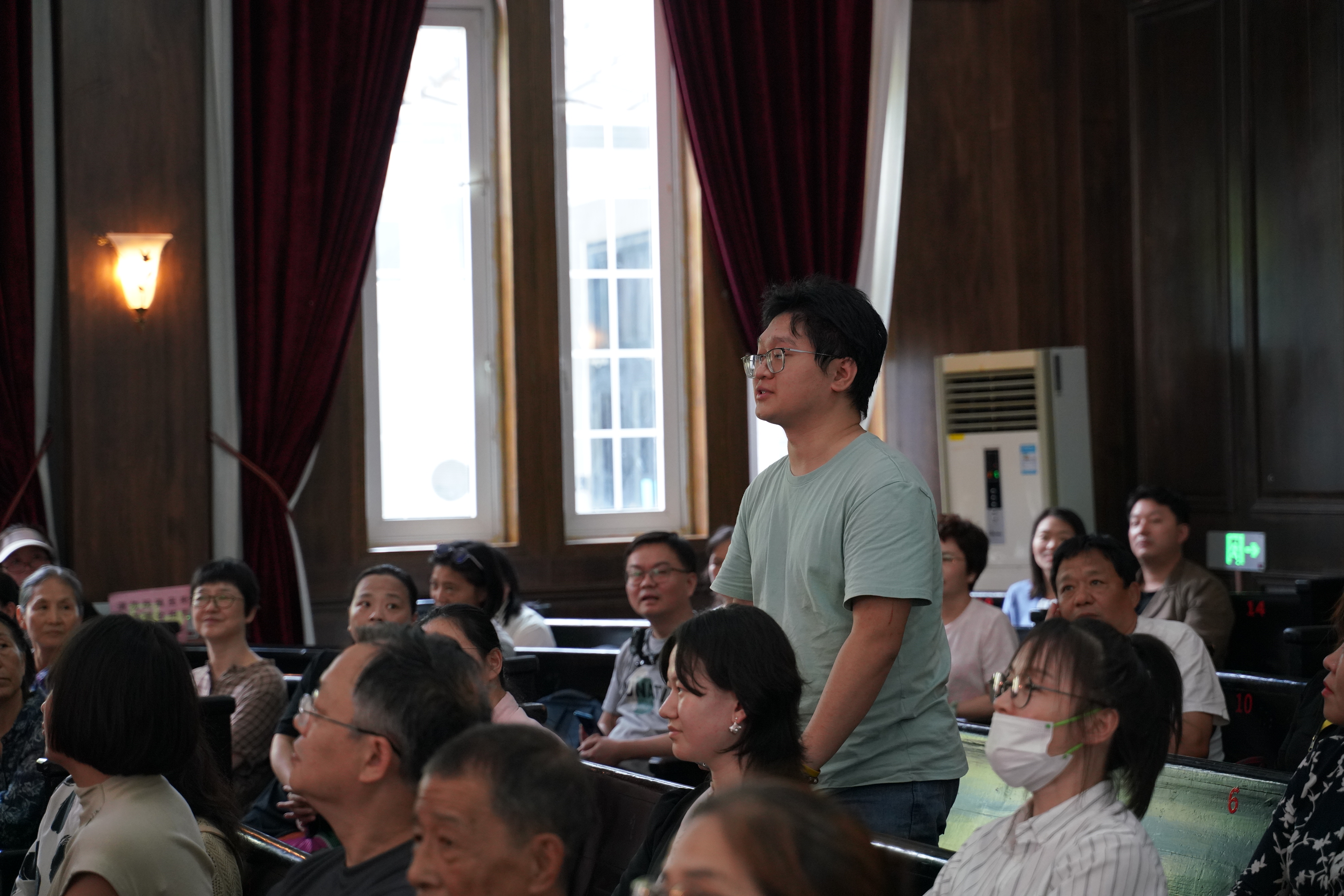
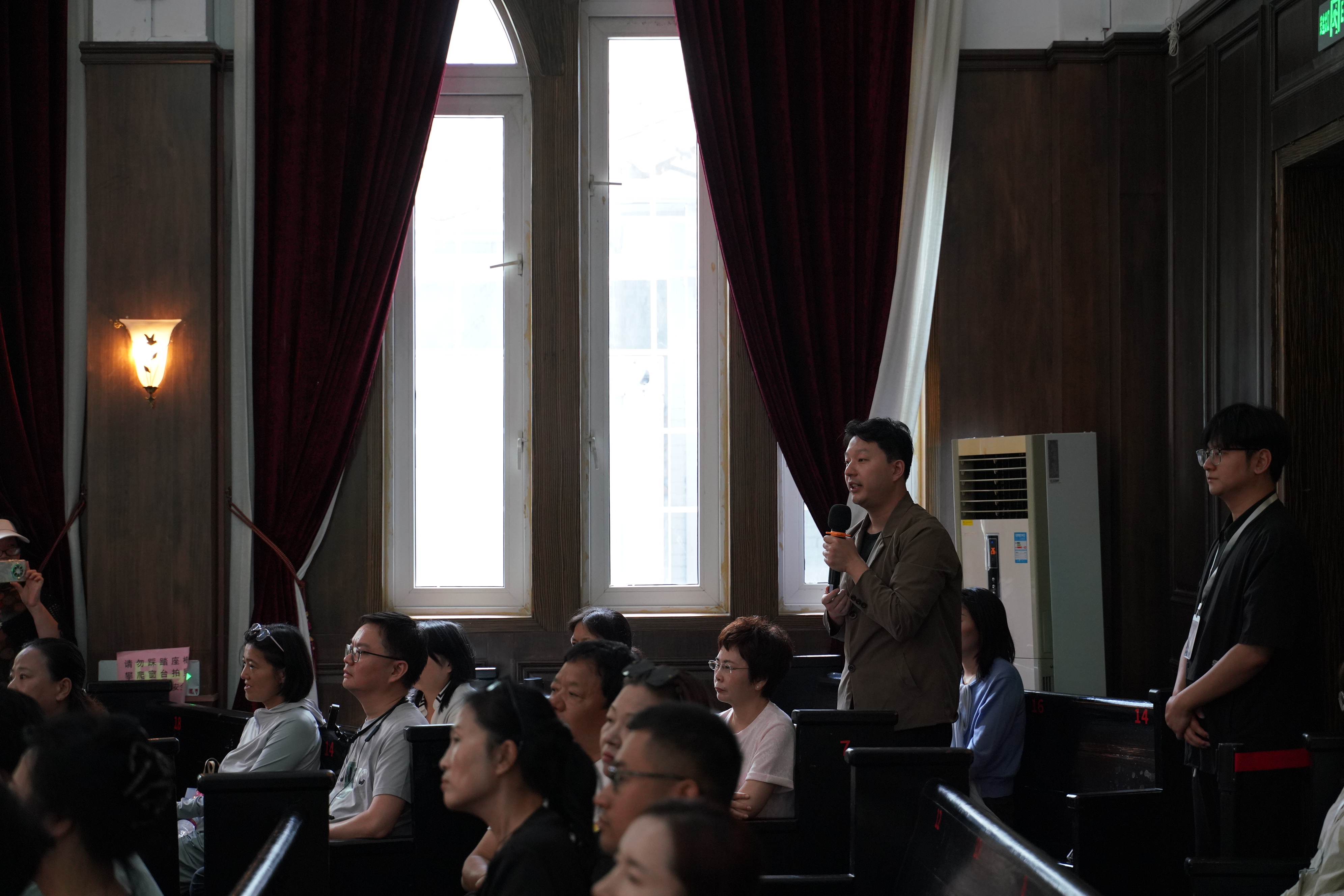
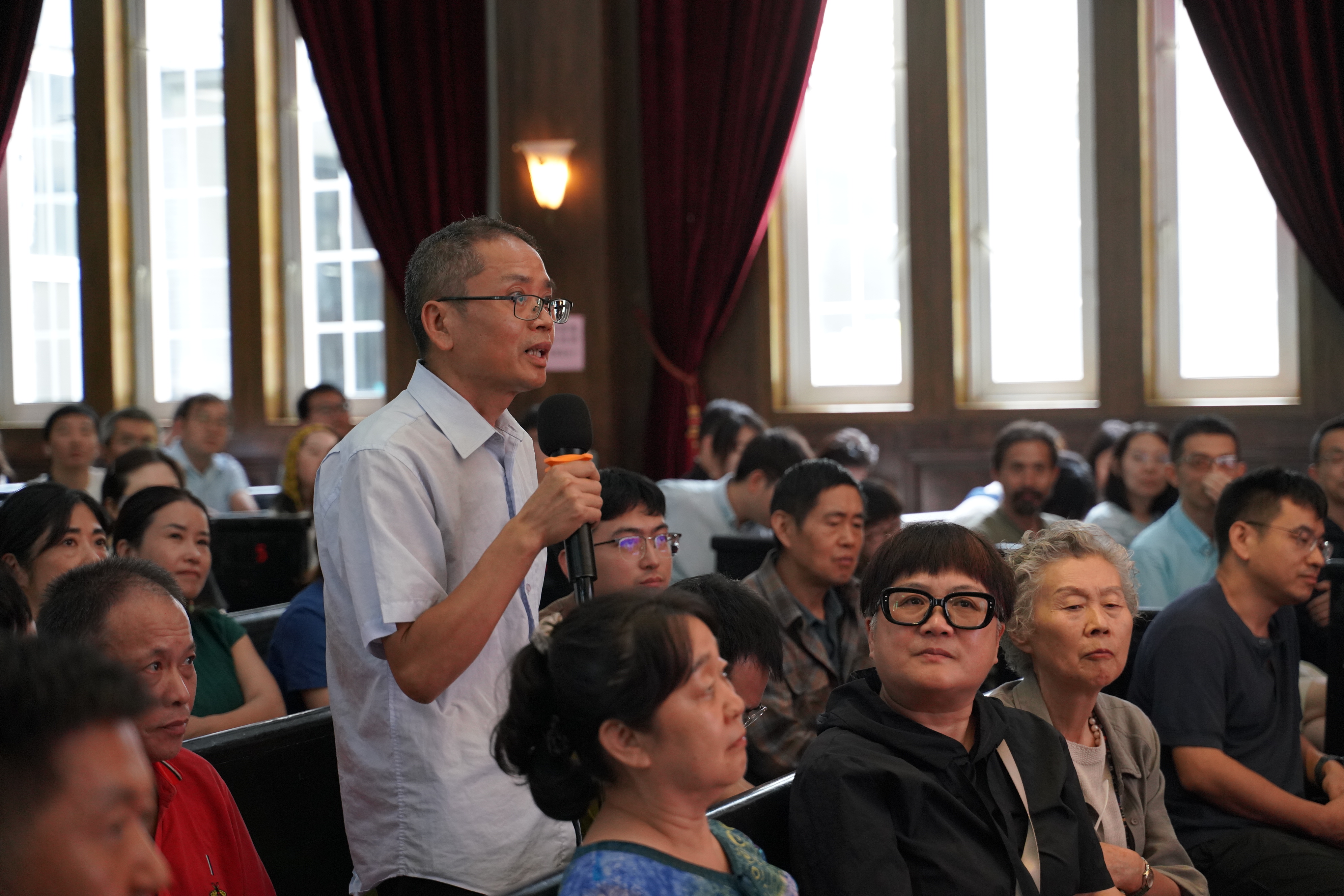
After the roundtable, audience members continued the discussion with questions rooted in contemporary life. AI can offer emotional companionship, but how does that differ from the love another human being can give? When a person is constantly defined by grades, profession, and identity, how can a genuine sense of self develop? And what, exactly, is the “bridge” in The Bridge Still Stands?
One audience member, a psychology graduate of Zhejiang University, said that the film and discussion had led him to a new understanding of the title The Bridge Still Stands.
Stuart was certainly someone who connected people, he said. Yet what truly connects individuals, cultures, and different eras cannot be reduced to any one person.
“The bridge appears to be Mr. Stuart, but in fact the bridge is not this person. It is truth.”
As he understood it, Stuart’s ability to bring love and service to another society was connected to the faith and pursuit of truth that he first possessed himself.
Another audience member brought the discussion directly into the age of artificial intelligence. When AI can already listen, respond, and even provide a form of psychological support, what distinguishes it from the love a real person offers?
Zhang Zhipeng responded that human beings possess imagination, empathy, emotion, and curiosity. More importantly, genuine love does more than accommodate a person’s needs and say what they want to hear.
Love involves acceptance, but also rules and boundaries.
Real human relationships therefore involve more than making someone feel comfortable. They include responsibility, limits, and the possibility of changing one another through real interaction.
The final audience question returned to the self and character.
One participant asked how we can fulfill our roles in society without being wholly defined by them. In everyday life, we are almost constantly being defined: grades, educational credentials, professions, social identities, and even the judgments of parents and others all tell us who we are.
Wang Xuefu offered two related observations in response.
First, he offered a reminder to those who teach others and define who they are: “You are not the truth.”
Whether a counselor, teacher, or parent, anyone who treats their own judgment as absolutely right can easily impose their will on another person in the name of doing what is best for them. An important starting point in educating, raising, and helping others is therefore to acknowledge our own limitations, while recognizing that the other person has an independent life and choices of their own.
At the same time, a person needs gradually to develop “a relatively stable sense of self” as they grow.
This does not mean being stubborn or refusing to listen to others. It means developing a reasonably stable understanding of oneself through years of experience, relationships, and reflection, together with the capacity to judge and choose.
With such a sense of self, someone can take on many roles—teacher, father, mother, scholar, or manager—without being completely submerged in any one of them. Nor will praise lead to an inflated sense of self, or criticism to wholesale self-rejection.
The outside world will always attach labels to us. Through an ongoing process of integration, however, a mature person ultimately needs to become able to say, “This is who I am.”
History Reaches into the Present
After the event, one audience member wrote in their feedback, “The film of the readings was made with real care.” Another said the roundtable questions connected well with present-day social issues, and that the guests’ responses were “professional and engaging.” Much of what they said, the participant added, deserved further thought and reflection afterward.
Perhaps this was what made the Nanjing event distinctive. Beginning with the choices, difficulties, and service in Stuart’s life, we discussed why education involves more than knowledge, how character develops, and why service deserves sustained commitment. We talked about young people’s sense of meaninglessness, whether AI can truly offer love, and how someone can become themselves beneath the countless labels placed upon them.
Here, a historical figure became connected to the present in a real way.
A university has long since passed into history, and a man’s life has ended. Yet history leaves more than names, buildings, and photographs. It also leaves questions that have not been fully answered.
How do we see people, and how do we treat them? What does education ultimately seek to develop? Why does one person serve another? How do we understand people who differ from us? In a world where we are ever quicker to define one another and cut ourselves off, are we still willing to reach out to another person, another culture?
What gives a bridge its meaning is not simply that it was once built.
It is that, even today, people are still willing to cross it toward one another.