
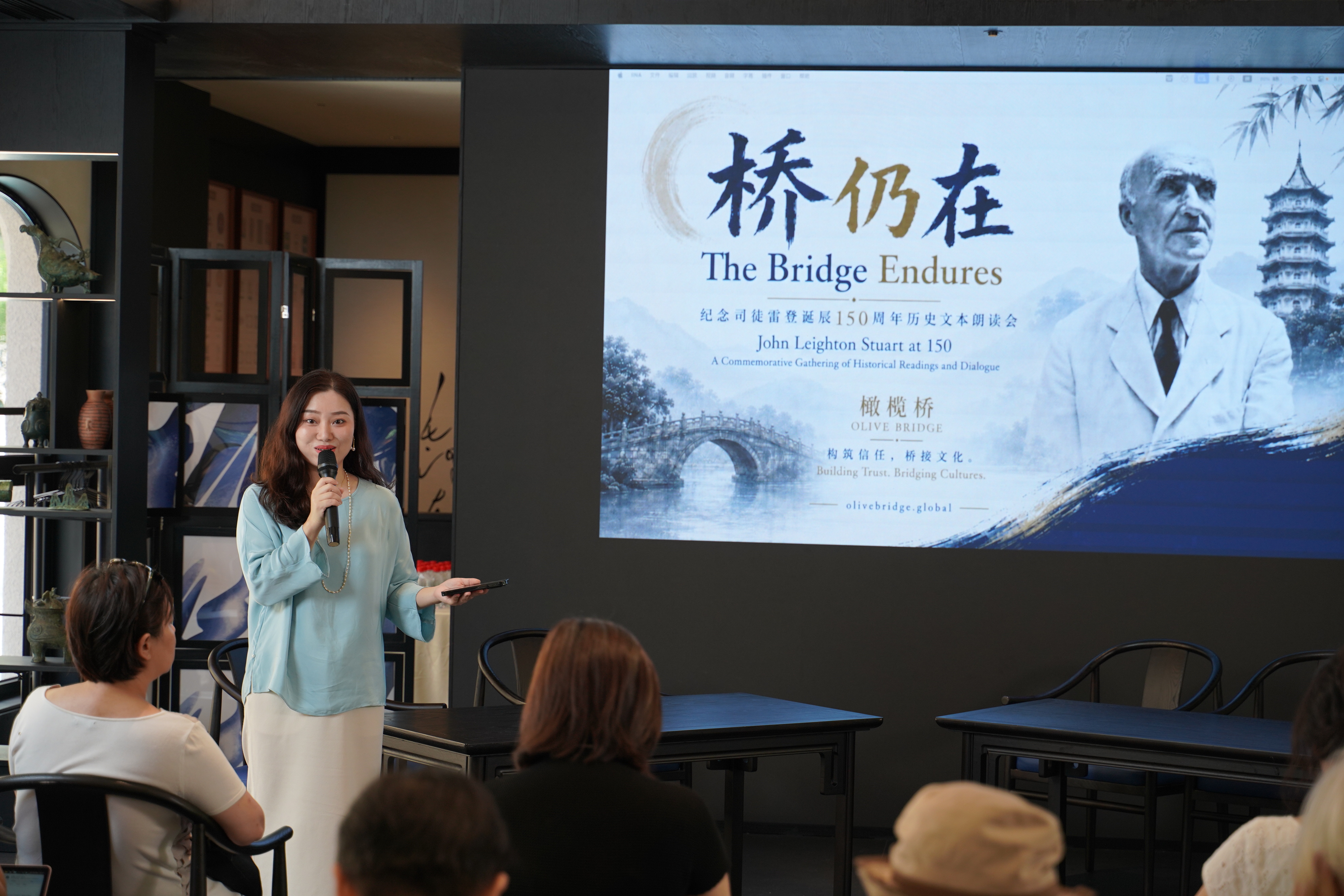
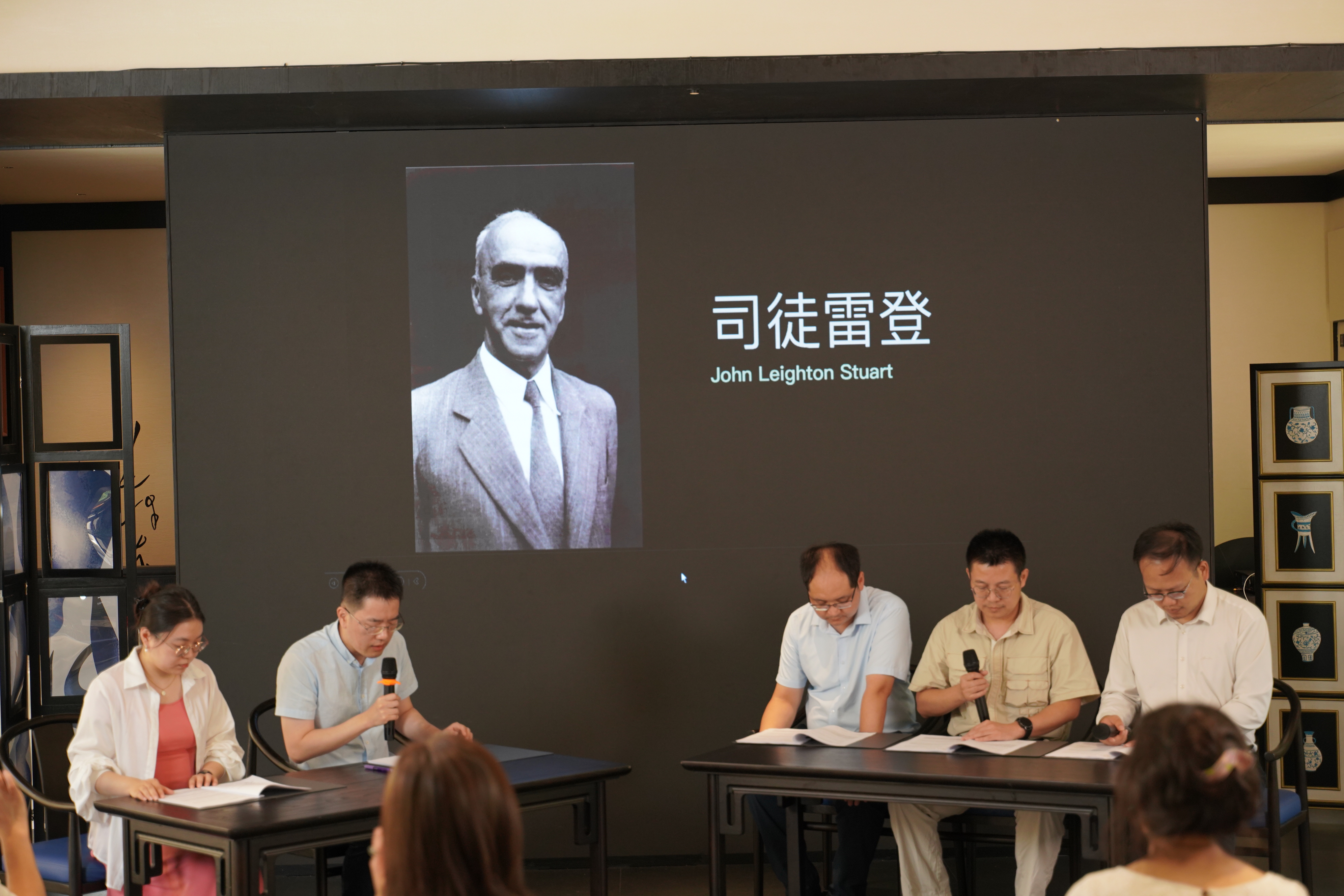
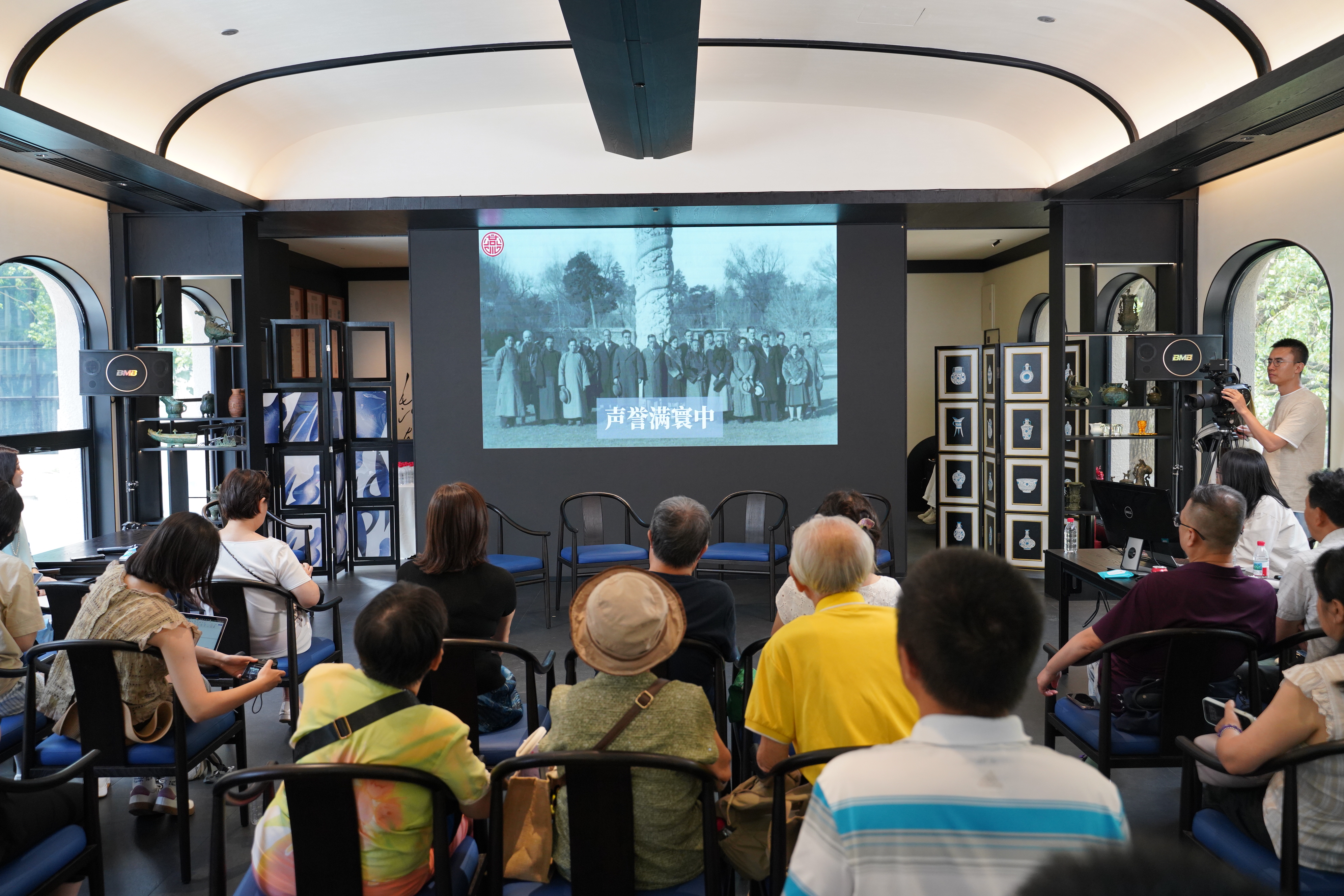
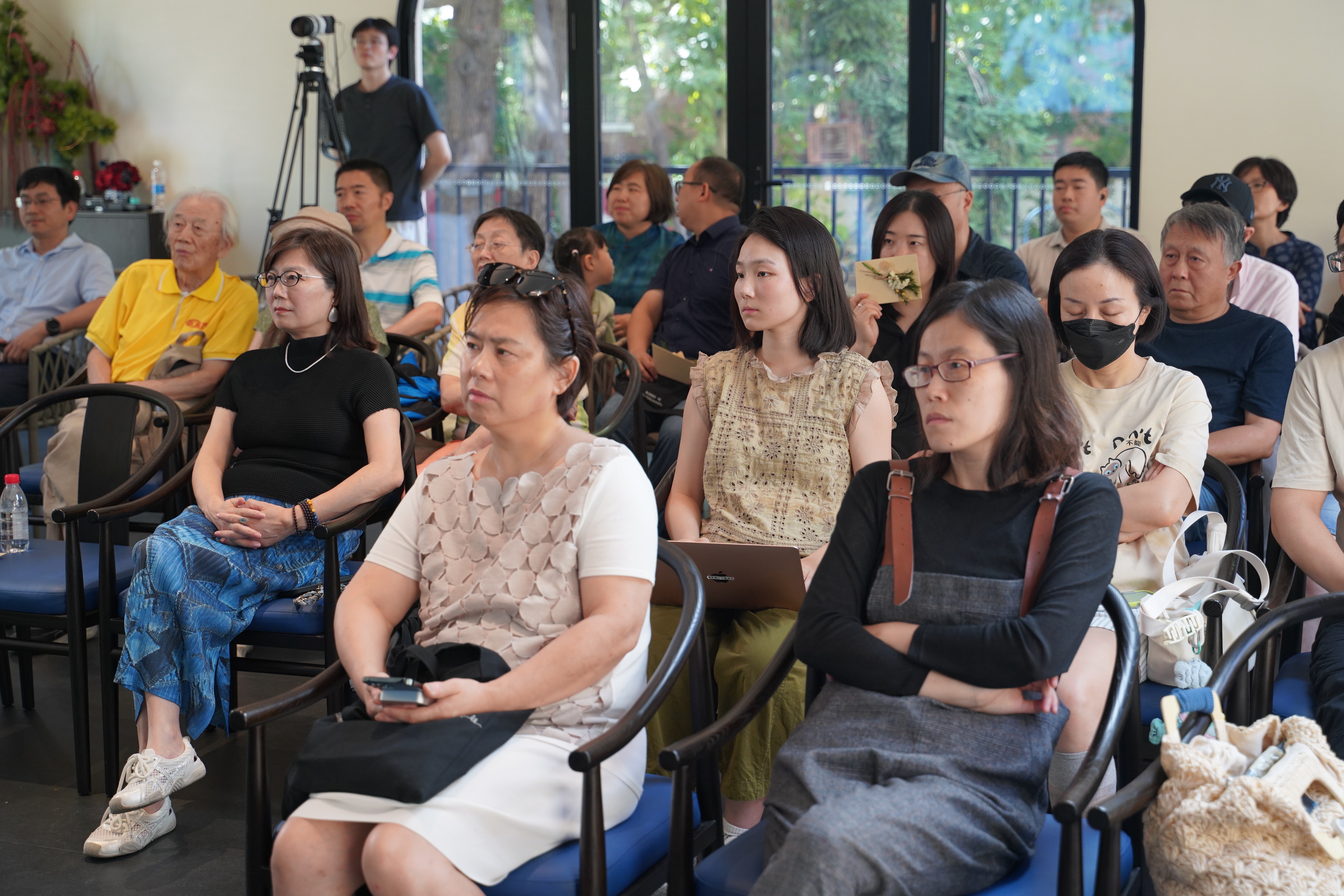
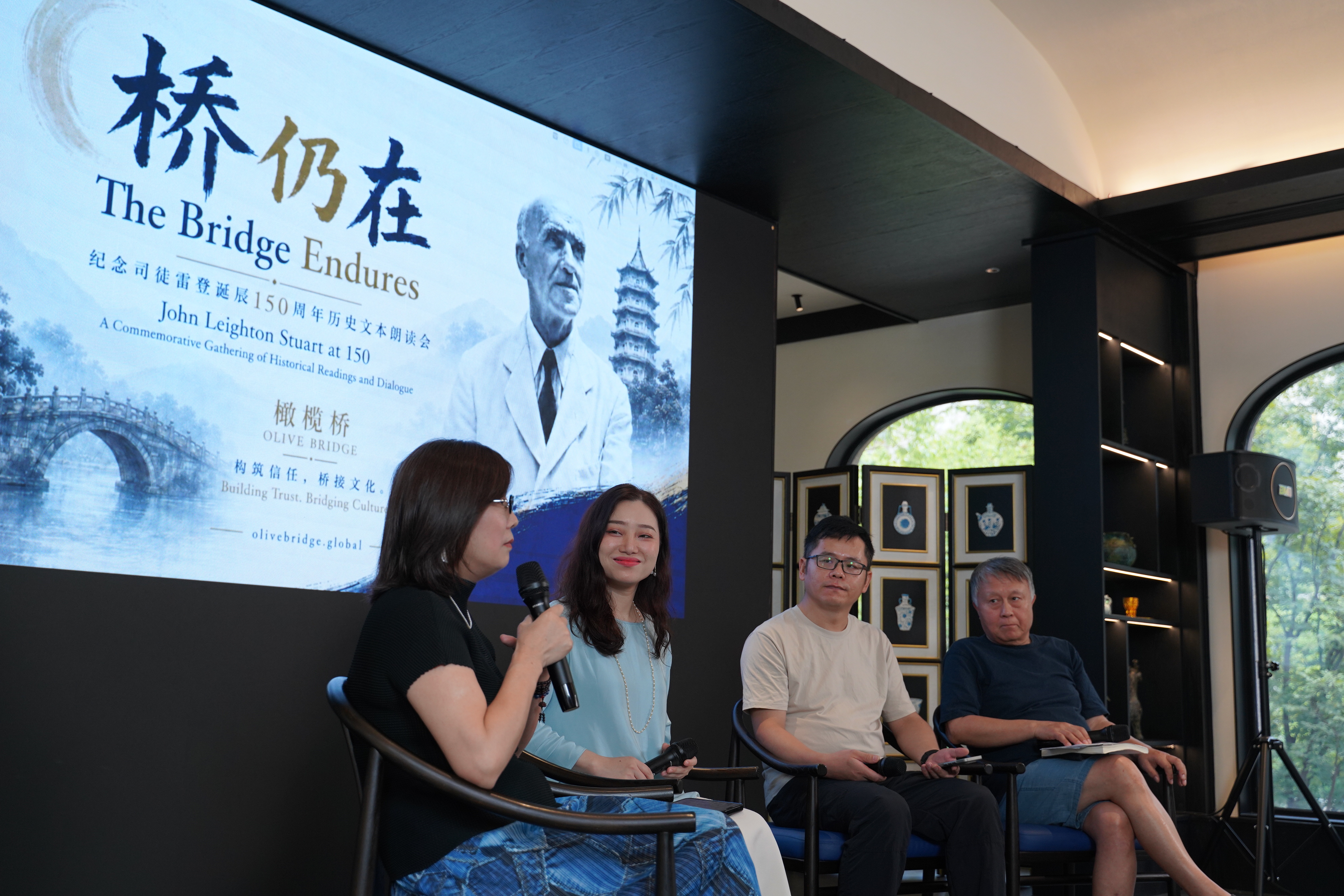
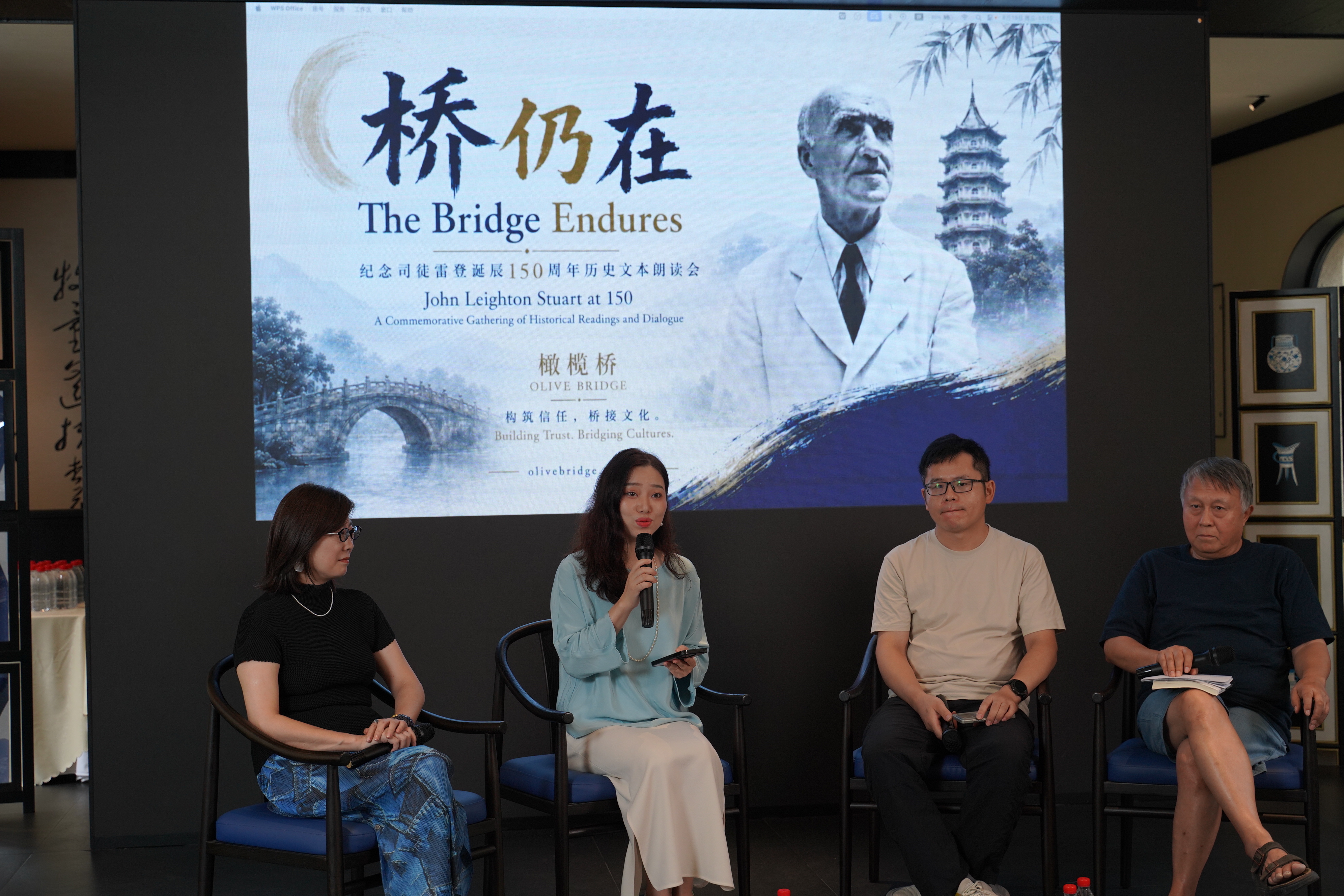
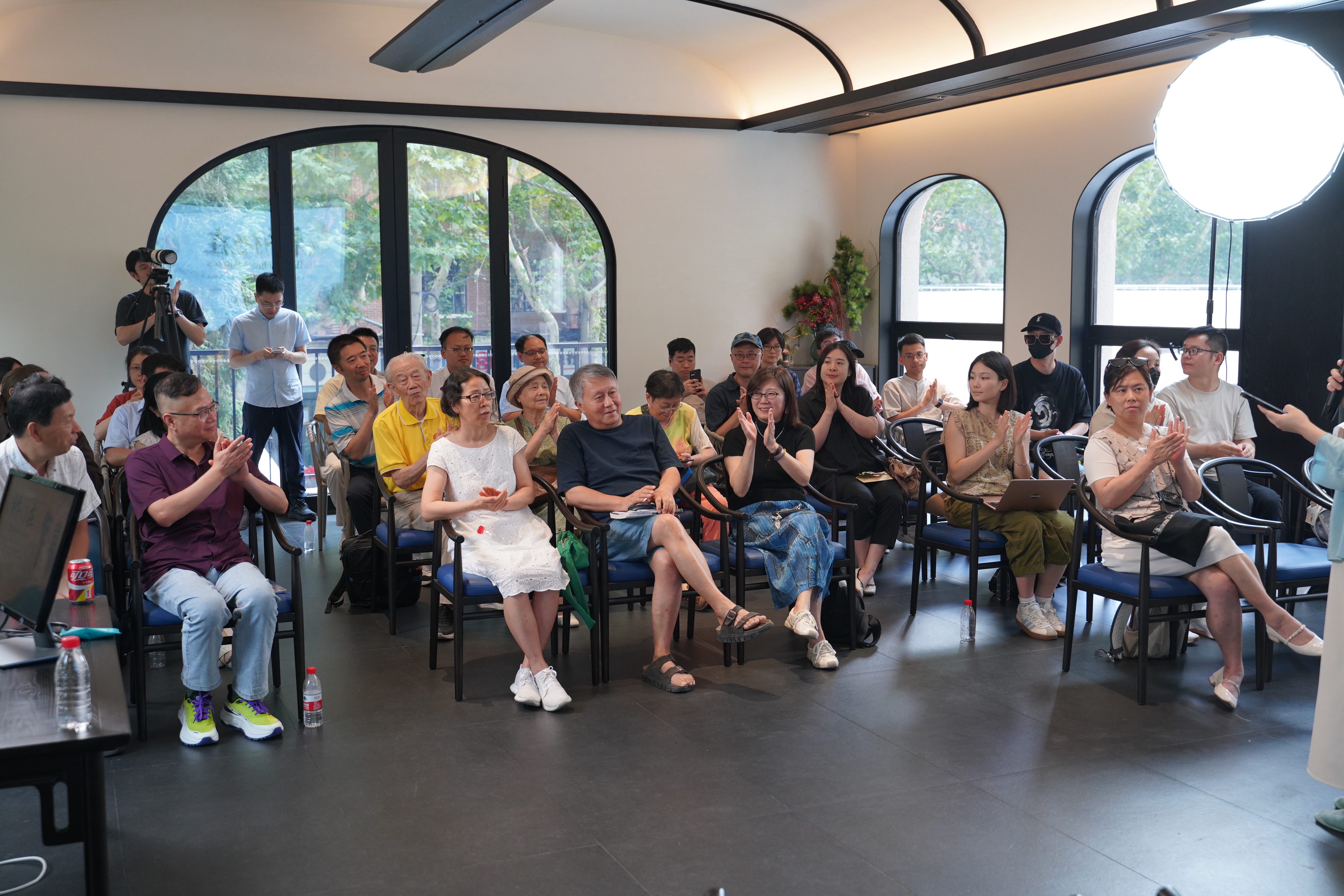
June 24, 2026, marked the 150th anniversary of John Leighton Stuart’s birth. That afternoon in Hangzhou, Olive Bridge held The Bridge Still Stands, an event commemorating the anniversary through readings of historical texts. The readings, old photographs, music, and roundtable discussion offered a fresh encounter with Stuart and the era in which he lived.
Nearly two months later, on August 19, The Bridge Still Stands came to Shanghai. Olive Bridge again marked Stuart’s 150th birth anniversary with historical readings, a roundtable, and conversation with the audience. New guests joined the event to continue, from Shanghai, the discussion of cross-cultural understanding, human connections, and how we might carry this “bridge” forward today.
Letting History Speak Again
The readings followed the course of Stuart’s life: his childhood in Hangzhou, his return to China, his commitment to education and the building of Yenching University, the upheavals of war and diplomacy, his later years, and finally his reinterment in Hangzhou. Stuart’s autobiography, diaries, and letters were interwoven with recollections by Hu Shi, Bing Xin, Wen Yiduo, Huang Hua, Fei Xiaotong, and Yenching faculty and students. Accompanied by old photographs, historical footage, and music, the audience returned to a period spanning more than half a century. A roundtable discussion followed the readings.
What Makes Someone a Bridge
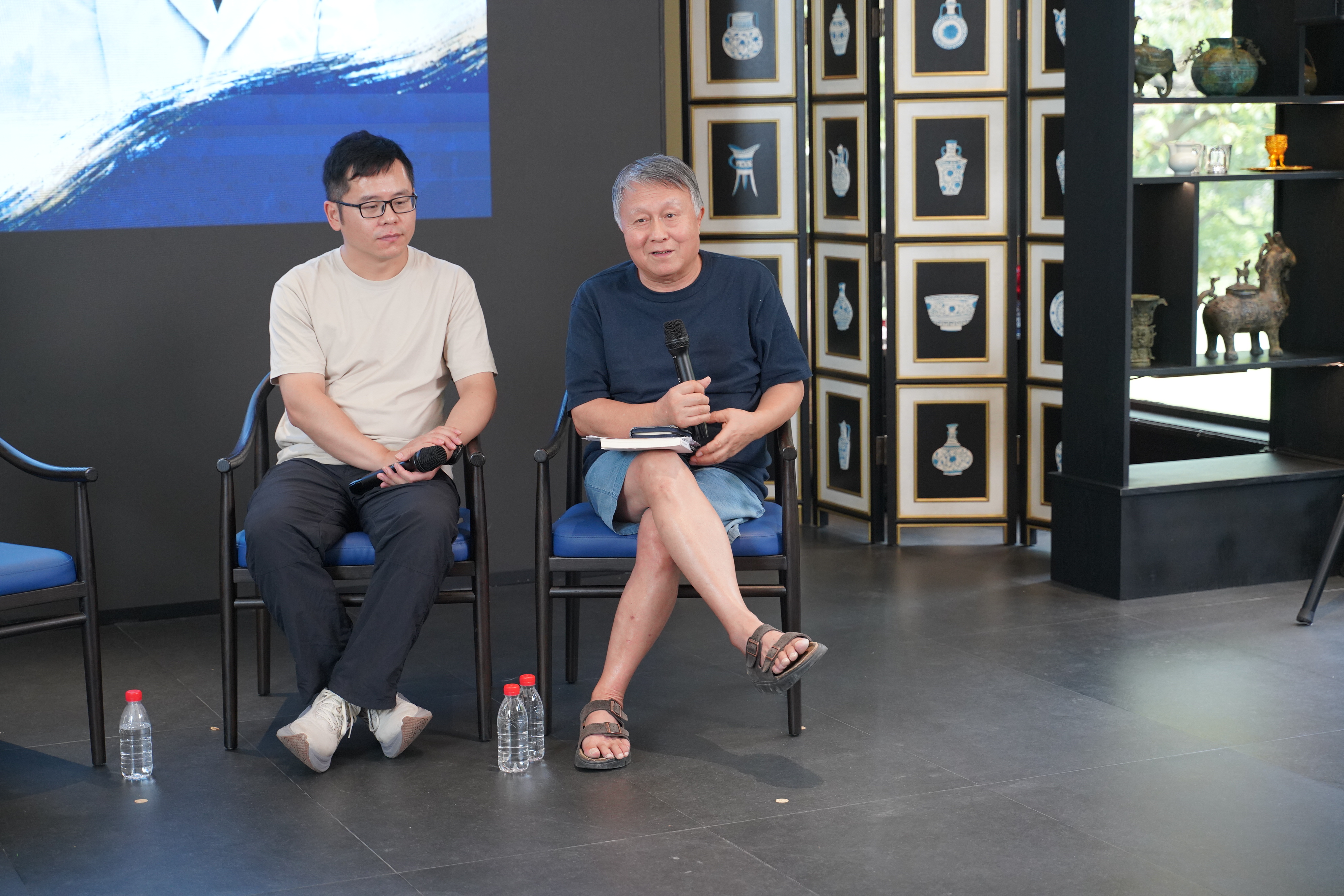
The Shanghai roundtable featured Xue Liqing, a professor at Nanjing Tech University; writer and playwright Jiang Yuanlai; and veteran journalist Li Shiguang. Coming from different fields, they brought different perspectives to Stuart, cross-cultural understanding, and the connections between people today.
Their first question was why Stuart had been able to become a communicator across cultures.
For Xue Liqing, Stuart’s religious faith is essential to understanding him. Faith was more than an identity for him; it was an inner motivation to serve and care for others. She also stressed that we should not reduce historical figures to simple labels, but return to their own times and particular circumstances.
Jiang Yuanlai offered a key phrase: “being there.”
One important reason Stuart understood China more deeply than many who studied it through books, Jiang suggested, was that he had lived through its history firsthand over many years. He lived and worked here, experiencing war and enormous social change. Genuine understanding often develops gradually through a shared life over time, rather than observation from a distance.
Li Shiguang turned to Stuart’s childhood. Growing up in China, Stuart accompanied his father in missionary work and saw for himself the real distance between cultures. Li suggested that these experiences led Stuart to keep asking how someone with their own faith and values could encounter another culture while respecting the other person’s freedom. This concern later found expression in Yenching University’s educational practice. The university respected students’ individual choices, did not compel them to take part in particular activities, and did not treat them differently on the basis of their backgrounds or choices.
Understanding Does Not Mean Agreement
As the discussion turned to the present, the three guests considered cross-cultural communication in the information age.
Information travels far faster today than it did a century ago. Yet conflict, misunderstanding, and distrust have not disappeared.
Xue Liqing spoke in particular about “echo chambers.” People often prefer to communicate with others like themselves because it feels more comfortable.
Yet genuine cross-cultural communication takes place precisely where we feel uncomfortable. When someone’s culture, nationality, religion, and experience differ entirely from our own, are we still willing to hear them out?
She emphasized that understanding does not mean agreement, and respect does not imply endorsement.
Real openness means acknowledging our differences while remaining willing to show patience and goodwill.
Jiang Yuanlai considered how we might continue building bridges.
Recreating the institutional “hardware” of a university such as Yenching might be difficult today, he said, but there is still enormous scope to develop the “software” of ideas, scholarship, and the arts. We need to revisit and organize the rich historical resources accumulated in the modern era, move beyond the boundaries of professions and disciplines, and, as Stuart did, engage in wide-ranging and sustained face-to-face dialogue with people from different backgrounds.
Jiang again stressed the need to “be there.” In an age of increasingly abundant information, what is truly scarce may be face-to-face contact, observation over time, and the patience to enter people’s actual lives and understand complex circumstances.
Li Shiguang brought the question down to the level of personal relationships.
We can, of course, hold convictions of our own and hope that others will understand them. But if the other person’s views ultimately remain unchanged, are we still willing to show goodwill?
If goodwill depends on the other person accepting us, the relationship remains conditional.
How Well Must We Know China Before We Can Say We Understand It
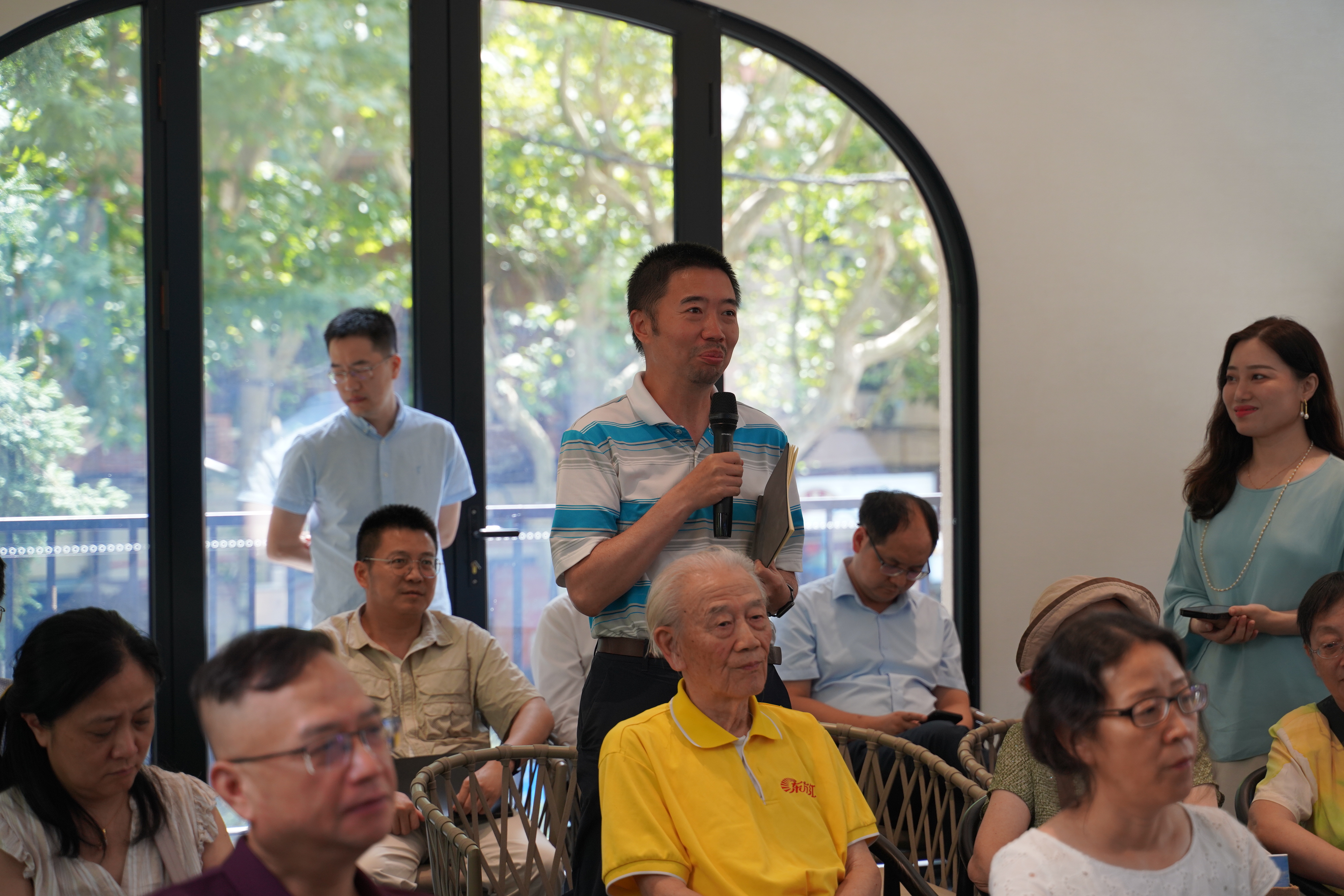
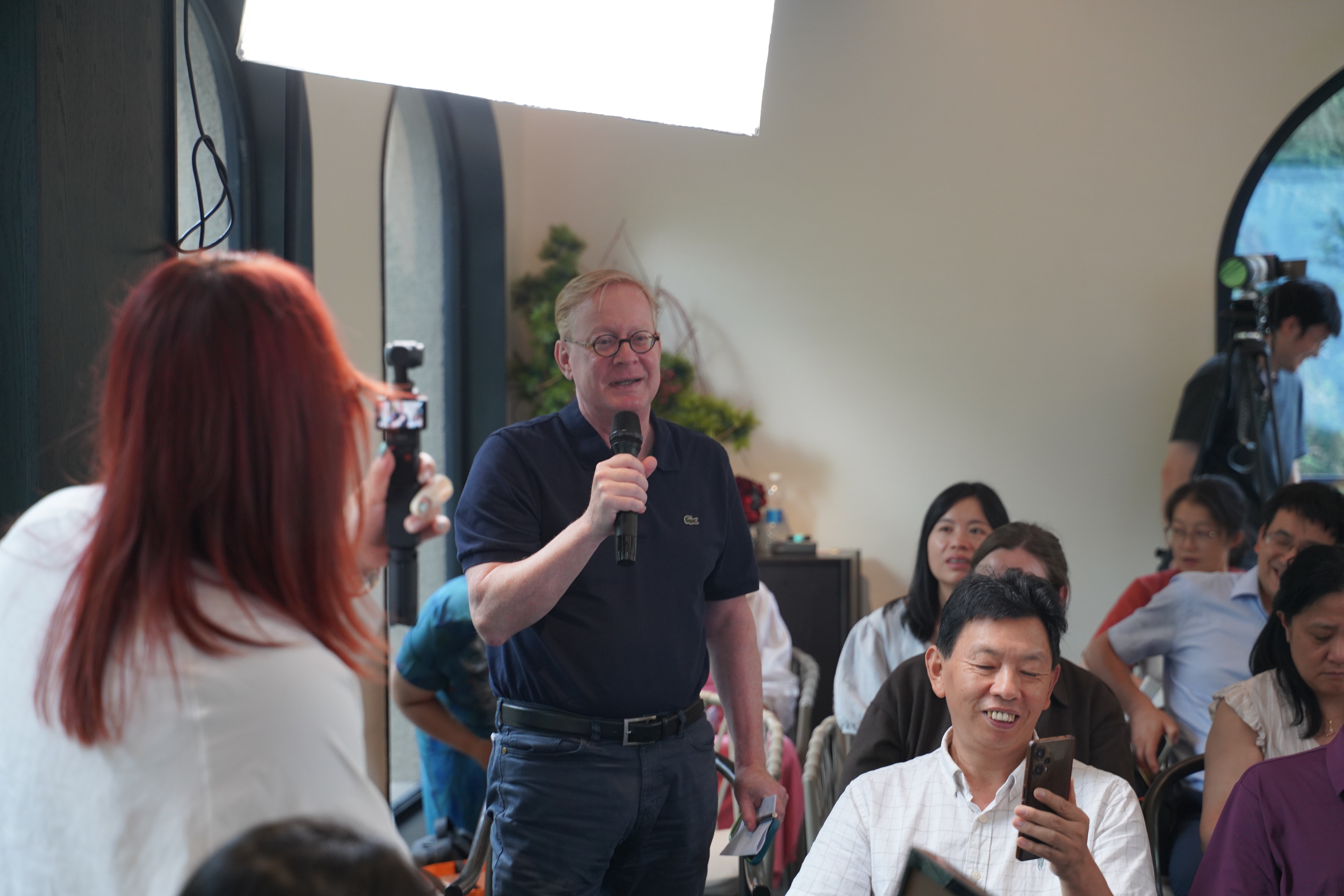
After the roundtable, special guest Patrick Cranley (柯炜文) posed an intriguing question.
He has lived in Shanghai for many years and has long taken an interest in the city’s history.
After listening to the readings and discussion, he asked, “How well do we have to know China before we can say we truly understand it?”
Xue Liqing replied that no one can claim to understand China completely.
A culture has both surface and deeper layers. Food, clothing, and everyday life are relatively easy to encounter, but values, historical memory, and a society’s collective outlook take longer to understand.
Ultimately, deep understanding develops through actual relationships between people.
Only when we truly live and work alongside others, and begin to understand why they think as they do and make the choices they make, does an abstract idea of “China” gradually become real people and real lives.
I Was Fortunate Enough to Meet You Once
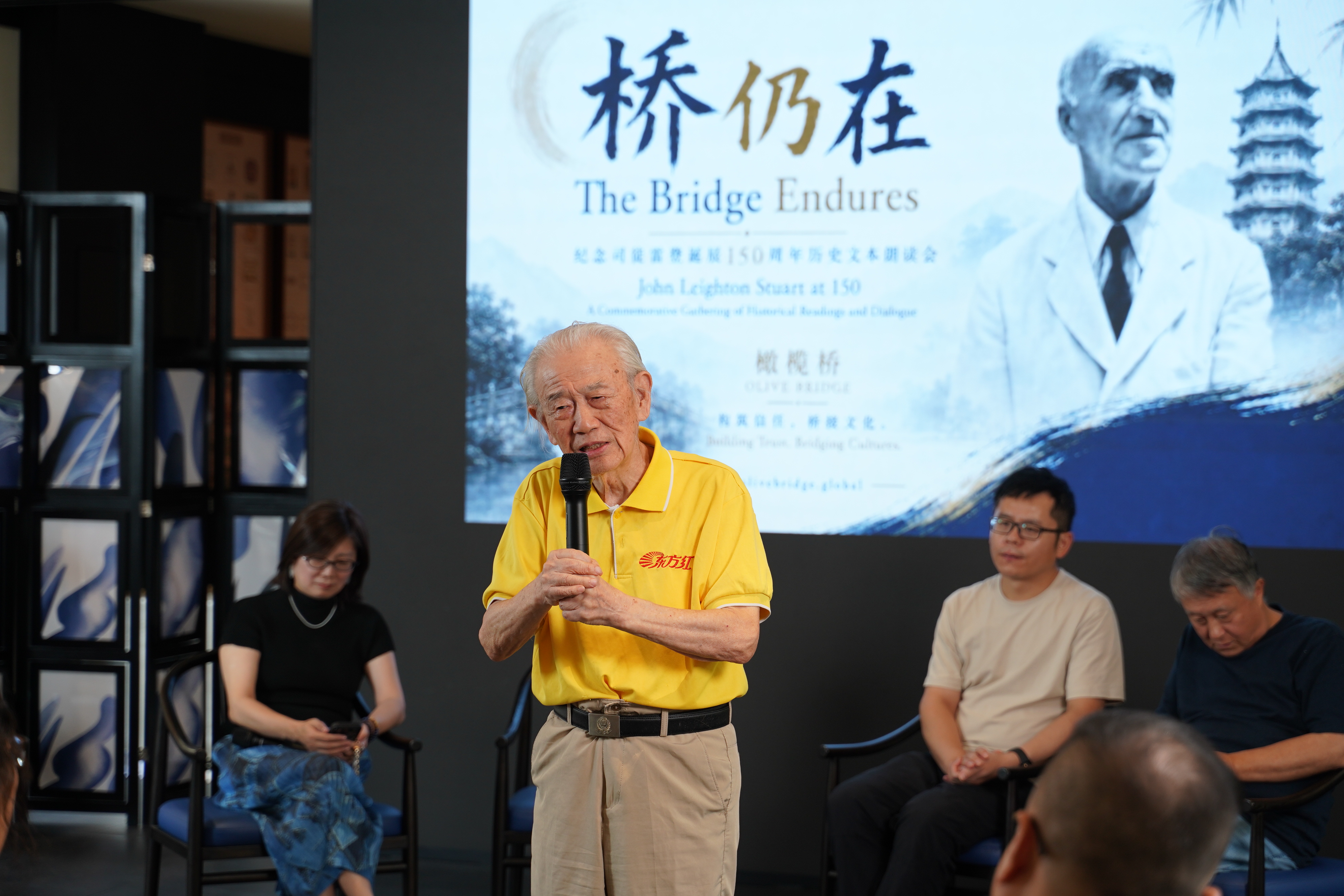
If Cranley’s question brought the discussion into the present, another special guest, Lü Desen, suddenly took everyone back eighty years.
Lü’s father had worked in the Yenching University library, and Lü himself attended both the university’s affiliated primary and secondary schools.
He described himself as “a second-generation Yenching man twice over.”
For most people today, Yenching University belongs to history. For Lü, it is first and foremost his childhood.
In 1946, he had only recently entered Yenching’s affiliated school. That year marked Stuart’s 70th birthday, and a teacher took several children to his home to wish him a happy birthday.
The children sang and performed, and Stuart treated them to sweets and snacks.
Eighty years later, Lü could no longer remember exactly what Stuart had said that day, but he had never forgotten the “kind and gentle” elderly man.
As he grew older, Lü said, he learned more about Stuart: how he could greet every incoming student by name, officiate at weddings for newly married couples on campus, and organize an Easter egg hunt each year for the children of faculty and staff. Lü himself had joined the hunt in 1946.
As he spoke, he choked up several times.
A figure who only moments before had belonged to autobiographies, photographs, and historical writings suddenly returned to the room through the memory of someone who had known him.
A Brick in the Bridge
Lü Desen ended by returning to the event’s title, The Bridge Still Stands.
Stuart himself, he said, was a bridge.
But a bridge does not belong to just one person.
He was willing to remain part of that bridge:
“To be a brick in the bridge, a piece of timber in the bridge.”
His words offered a simple yet powerful response to the day’s discussion.
We often imagine cross-cultural exchange on a grand scale.
Yet real bridges may begin with small things:
Learning a language, reading a book, getting to know a city, or listening attentively to someone different from ourselves until they have finished speaking.
History cannot be recreated.
But the pursuit of understanding, respect, freedom, and friendship that history records can still be carried forward by people today.
From Hangzhou to Shanghai, the city changes, and the conversation continues.
As long as people remain willing to reach out to one another, the bridge still stands.
END